Read Online Ancient Civilizations of Islam - Muslim History for Kids - Early Dynasties Ancient History for Kids 6th Grade Social Studies - Baby Professor | PDF
Related searches:
Early Islamic World for Kids - Ducksters
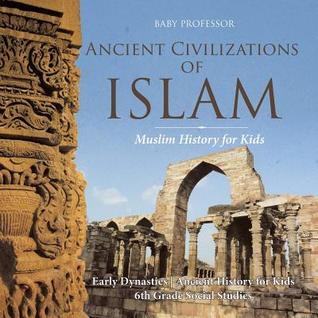
Ancient Civilizations of Islam - Muslim History for Kids - Early Dynasties Ancient History for Kids 6th Grade Social Studies
Ancient Civilizations of Islam - Muslim History for Kids - Early
Ancient Civilizations of Islam - Muslim History for Kids - Bookshop
Makers of Islamic Civilization Oxford Centre for Islamic Studies
History of the Early Islamic World for Kids: Timeline
3864 4962 4961 4833 2735 1116 2725 3532 4284 4811 3478 4584 2736 3386 2190
The two great civilizations of classical antiquity were ancient greece and ancient culture survived, but others were lost.
Ancient arabic civilization: islamic culture and society posted on january 27, 2018 by acw the arabian culture developed in arabia, a peninsula situated between the red sea and the persian gulf, in southwestern asia. Due to its arid climate, arabia is a desert where agriculture is only possible in some coastal locations and inner oases.
Religious beliefs of the peoples of the silk road changed radically over time and others were followers of the old religion of egypt, especially the cult of isis.
As islamic ideas and cultures came into contact with new societies, they were early on in islamic history, under the rashidun caliphate—the reign of the first.
The role of religion in the development of mathematical sciences in medieval islamic civilization the rise of islamic civilization was one of the major events in world history.
Aug 20, 2020 the mali empire brought wealth, culture, and islamic faith to west africa. Anthropology, social studies, ancient civilizations, world history.
The prehistory of islamdom is the history of central afro-eurasia from hammurabi of babylon to the achaemenid cyrus ii in persia to alexander the great to the sāsānian emperor anūshirvan to muhammad in arabia; or, in a muslim view, from adam to noah to abraham to moses to jesus to muhammad.
The role of women in islam has been debated since the days of muhammad in the seventh century. Umma salama, one of muhammad’s wives, is said to have asked muhammad why the quran “did not speak.
The early islamic world was a period of rapid expansion for both the islamic empire and the religion of islam.
Purported to have studied in many different regions with prominent muslim religious scholars of his time, dhul nun has come to serve as a representation of islamic modes for engaging the wisdom of pre-islamic traditions in general and ancient african spirituality in particular.
Ancient muslim scholars also did their best to advance their body of knowledge with a focus on learning and education as part of the islamic philosophy of a well-lived life. Eventually formal schools known as madrassas emerged and ideas were exchanged in these centres of learning scattered across the empire as libraries and universities were built.
Why should we study the early islamic civilization? key knowledge.
As millions of people embraced islam, they brought with them the heritage of ancient civilizations like egypt, greece, india, persia, and rome.
Jan 16, 2020 the islamic civilization is today and was in the past an amalgam of a wide variety of cultures, made up of polities and countries from north.
The islamic golden age refers to a period in the history of islam, traditionally dated from the 8th century to the 13th century, during which much of the historically islamic world was ruled by various caliphates and science, economic development, and cultural works flourished.
Andalusia one of the routes of islamic civilization to europe. Andalusia is the main route of islamic civilization and the most important bridge through which islamic civilization moved to europe and had an impact on various scientific, intellectual, social, and economic fields.
Conclusion about timbuktu civilization and its significance in islamic history. Timbuktu civilization in prehistoric period it is widely believe that timbuktu was founded in the 12th century ad by nomadic tuareg. However, the human history in the timbuktu region is deeper than the historical tuareg settlement.
A man meditating alone in a cave near mecca received a religious vision.
The foundations of the muslim civilization are laid in the city state of medina. *632* prophet muhammad dies after giving his ‘farewell sermon’. Abu bakr, a close companion of muhammad, is unanimously selected as the first caliph of islam.
I would like to introduce the subject of the great islamic civilization and its noble characteristics with a speech given by a non-muslim business woman from today’s western civilization. The woman who gave this speech is carly fiorina was the ceo of hewlett packard from 1999 to 2005 until she resigned from her position.
The age of islamic civilization started when muslim conquests led to the establishment of the caliphate, or islamic empire, during the 8 th to 10 th century. Consequently, the muslim world was recognized as the epicenter of all knowledge. In astronomy, islamic civilization in spain made important discoveries.
The metaphor of a golden age began to be applied in 19th-century literature about islamic history, in the context of the western aesthetic fashion known as orientalism. The author of a handbook for travelers in syria and palestine in 1868 observed that the most beautiful mosques of damascus were like mohammedanism itself, now rapidly decaying and relics of the golden age of islam.
Did you know that once upon a time, islam was a powerful religion that has spread to many countries? not only that, it has also influenced civilizations, cultures,.
Muslim armies conquered most of arabia by 633, followed by north africa, mesopotamia, and persia, significantly shaping the history of the world through the spread of islam. Umar ibn khattab, the second caliph, was killed by a persian named piruz nahavandi.
This curriculum was designed to supplement content standards in social studies and world history relating to the study of world civilizations and their contributions. The curriculum is composed of six individual lesson plans, each of which focuses on different parts of the digital presentation, muslim contributions to civilization�.
Big question:why was the flight to medina the start of a new period in the history of islam? between 632 ce and 750 ce, islam spread to the borders of india and china in the east, through northern africa, and into spain.
Ernst argues that “the concept of what is called western civilization should��� include islam” on the grounds of muslim philosophers’ active engagement with ancient greek thinkers. After centuries of neglect, european philosophers rediscovered greek philosophy and translated the works of plato and aristotle, as well as the original.
Medieval muslims fostered the art known as adab, which came to imply the sum of intellectual knowledge based on pre-islamic poetry, the art of oratory, and the historical and tribal tradition of the ancient arabs, as well as the corr.
In islam there was generally a moral imperative to treat all the ill regardless of their financial status. The hospitals were largely secular institutions, many of them open to all, male and female, civilian and military, adult and child, rich and poor, muslims and non-muslims.
Arts and humanities world history 600 - 1450 regional and interregional interactions spread of islam the rise of islamic empires and states learn about the arab muslim conquests and the establishment of the caliphate.
The narration of historical events and the reflexion upon their causes are old scholarly concerns since ancient times. In islamic culture, a specific arabic historiographical tradition emerged very early, since the late 7th century, to account for the history of islam and the development of its civilisation. The following article presents a general outline on the islamic historical literature.
Now if we look at the islamic civilization, the material welfare attained by the muslims during the rashidun caliphate and early muslim empires can be called as the body of the islamic civilization and on the other hand, the spiritual and moral teachings of islamic religion can be categorized as the sole of this entity.
A very important element of the islamic civilization is the equality or equity. In islam, everyone is equal in the eyes of allah as a human being but it also distinguishes bad deeds from good ones. In islamic teachings, the element that makes a human superior to other is piety or taqwa.
Faiths worked under the umbrella of islam to produce a unique culture of far superior to any that existed in ancient times or in lands beyond the islamic empire.
History for kids early islamic world 570 - muhammad is born in the city of mecca. 610 - the religion of islam begins when muhammad receives the first revelations of the quran. 622 - muhammad and his followers move to medina to escape persecution in mecca. This migration becomes known as the hijrah and marks the beginning of the islamic.
Nov 25, 2019 islam is an abrahamic-monotheistic religion based upon the teachings orphaned at an early age, he was raised by his uncle abu talib, who is said by the time of the third caliph, uthman, the whole of egypt, syria,.
Welcome to the web page on muslim contribution to humanity and islamic civilization. This page is dedicated to those muslims whose multi-disciplinary contributions sparked the light of learning and productivity and without whom the european renaissance would not have begun and come to maturity.
Mongol descendants created islamic civilizations and cultures of their own, such as the mughal. Muslims' civilized behavior is most evident in their treatment of jews during their persecution by christians during the early decades of muslim expansion. Jews who fled christian persecution sought refuge in muslim countries.
Ancient history help! ancient accounts of arabia 430 bce-550 ce islamic civilization; 2nd oleg grabar: ceremonial and art at the umayyad court.
During the early period of development, islam was influenced by different factors.
Visitors to the museum can explore the discoveries and inventions of muslim scholars throughout the ancient islamic history.
Did you know that once upon a time, islam was a powerful religion that has spread to many countries? not only that, it has also influenced civilizations,.
The muslim scholars were immensely motivated by the verses of holy qur’an which encourage men to travel in the world and make observations about civilizations and nations to derive lessons and guidance from their stories.
Chronologically studying, the most important education centers of the islamic civilization in the early centuries are: mosque; maktab; beytolhekma and darolelm;.
Trade contributed to the spread of islamic culture and led to a growing feeling of development of these sects were certainly present in the early history of islam,.
Muslims traded high-quality goods such as silk, carpets, ivory and spices. Knowledge of science and medicine in the islamic world was far more sophisticated than in western europe.
Islamic civilization and culture during the european renaissance period follows earlier periods of exchanges, especially with the islamic golden age,latin translations of the 12th century, renaissance of the 12th century, and islamic contributions to medieval europe. Information on islamic civilization in europe during the renaissance period (11th to 16th centuries) is scattered and widespread.
Jul 14, 2019 western civilisation and islam are sometimes seen as diametrically opposed.
Knowledge was synthesized from works originating in ancient mesopotamia, ancient rome, china, india, persia, ancient egypt, north africa, ancient greece, and byzantine civilizations. Rival muslim dynasties such as the fatimids of egypt and the umayyads of al-andalus were also major intellectual centres with cities such as cairo and córdoba.
Major empires and dynasties of the islamic world: important facts and events their rule marked the beginning of a revival of persian art and culture.
In destiny disrupted, author tamim ansary considers the history of the world through islamic eyes. Starting from the same cradle of civilization, he explains how western and muslim perceptions of civilization diverged into two separate universes - and how they are merging again in today's geopolitical scene.
The arabian branch (the original type of islamic civilization) spread from its homeland of arabia across much of southwest asia and northern africa. The persianate branch, which resulted from the melding of islamic and persian culture, emerged in iran and radiated to the west, north, and east.
Islamic history and culture can be traced through the written records: pre-islamic, early islamic, umayyad, the first and second abbasid, the hispano-arabic, the persian and the modern periods. The various influences of these different periods can be readily perceived, as can traces of the greek, the indian, and the pre-islamic persian cultures.
The islamic golden age is traditionally dated from the mid 7 th century to the mid 13th century when muslims established the la rgest empires in history.
Ikram part one: the early invasions and the delhi sultanate, 712-1526 *9 -- the interaction of islam and hinduism*.
In addition, second-year level competence is required in a second language of importance in islamic history.
In this video, abdul wahab saleem discusses various aspects of the civilization of islam and muslims. He explains how different aspects of the muslim civilization impacted the modern western civilization. This website is for people of various faiths who seek to understand islam and muslims.
Although its roots go back further, scholars typically date the creation of islam to the 7th century, making it the youngest of the major world religions.
The speed of the muslim expansion, and the speed of the growth of islamic civilization, prevented fundamental social changes below the highest level and apart from the arrangements which followed logically from the basic rationale of muslim community structure. The dominant concerns of muslim civilization had originated in the arab milieu.
The new cambridge history of islam is a comprehensive history of islamic civilization, tracing its development from its beginnings in seventh-century arabia to its wide and varied presence in the globalised world of today.
The city exhibits outstanding evidence of the civilizations which created it - hellenistic, roman, byzantine and islamic.
Islam has been one of the most powerful religious, social and political forces in history. Over the last 1400 years, from origins in arabia, a succession of muslim polities and later empires expanded to control territories and peoples that ultimately stretched from southern france to east africa and south east asia.
Jan 29, 2010 in 9th century spain, muslim inventor abbas ibn firnas designed a flying machine -- and stretched as far as parts of china -- to present day civilization.
History of islamic culture: secular muslim literature developed in the umayyad empire. It was taken by the arabs to distant lands and became part of a popular culture. In due course of time, persian became one of the main languages of the civilization.
The makers of islamic civilization is a series of concise and accessible biographies of influential figures in the history of islam.
Over the next five centuries islamic culture flourished and baghdad became much ancient knowledge was preserved and the development of islamic theology,.
The new cambridge history of islam 6 volume set the new cambridge history of islam is a comprehensive history of islamic civilization, tracing its development from its beginnings in seventh-century arabia to its wide and varied presence in the globalised world of today.
A history of science in society: from the ancient greeks to the scientific revolution, north york, ontario, canada: university of toronto press.
From its point of origin in arabia, islam developed into a global civilization that eventually encompassed large portions of the middle east, asia, africa, and europe.
The emergent islamic civilization during the caliphate of ʿabd al-malik ibn marwān (ruled 685–705), which followed the end of the second fitnah, and under his successors during the next four decades, the problematic consequences of the conquests became much more visible.
The ancient systems of irrigation the muslims inherited were in an advanced state of decay. [12] the muslims repaired them and constructed new ones; besides devising new techniques to catch, channel, store and lift the water, and making ingeniously combine available devices.
Islamic civilization on the outer edge of the latin world, in spain, sicily, and north africa, and surrounding byzantium in egypt, palestine, and syria, was the world of islam. For centuries, islam was both a threat and the source of new ideas to the greek east and latin west.
The umayyads ruled when the arab muslim conquest of former byzantine and sasanid territories were taking effect, and islam emerged as the major religion and culture of the region. The new society, with its capital moved from mecca to damascus in syria, had included both islamic and arabic identities.
Oct 25, 2016 northern iraq, a wellspring of successive ancient civilizations including the assyrian and akkadian empires, is a trove of antiquities.
Post Your Comments: