Full Download Sexual Selection: Perspectives and Models from the Neotropics - Regina H. Macedo file in PDF
Related searches:
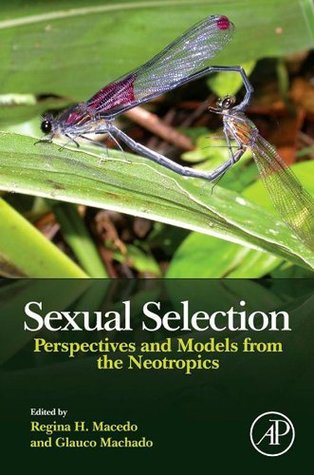
Sexual Selection: Perspectives and Models from the Neotropics
Adaptations to sexual selection and sexual conflict: insights from
Amazon.com: Sexual Selection: Perspectives and Models from
Sexual Selection in Plants: Perspective and Overview: The
Sexual Selection and Mate Choice: Insights from Neutralist
Darwin, sexual selection, and the brain
The Relationship between Sexual Selection and Sexual Conflict
Sexual selection and mate choice
Male competition and speciation: expanding our framework for
Sexual Selection in Plants: Perspective and Overview - JSTOR
Tactical Tentacles: New Insights on the Processes of - Frontiers
The dark side of sexual selection: Trends in Ecology & Evolution
The Power of Sexual Selection Psychology Today
Parasites and Sexual Selection: A Macroevolutionary Perspective
Sexual Selection News, Articles The Scientist Magazine®
Natural and sexual selection act on different axes of variation in
(PDF) Sexual Selection in Primates. New and Comparative
A Review of Sexual Selection and Human Evolution: How Mate
Sexual Selection and Sex Differences in Social Cognition
Attractiveness, attraction, and sexual selection
How Sexual Selection Drove The Emergence Of Homosexuality
Toggle navigation Evolutionary psychology, consciousness and
Sexual Selection and Speciation - Evolutionary Biology - Oxford
(PDF) PERSPECTIVE: SEXUAL CONFLICT AND SEXUAL SELECTION
PERSPECTIVE Diversification under sexual selection: the
Sexual selection and its evolutionary consequences in female
Interactions between the sexes: New perspectives on sexual
The Evolutionary Psychology of Human Mate Choice: How Ecology
Perspective: Sexual Conflict and Sexual Selection: Chasing
PERSPECTIVE: SEXUAL CONFLICT AND SEXUAL SELECTION: CHASING
Personality and Social Psychology Bulletin
Homosexual Mating Preferences from an Evolutionary
More articles from Perspective PNAS
4618 4933 277 3517 3121 4131 4785 4991 4199 520
This life-history perspective on the costs and benefits of multiple matings for both sexes sheds new light on sexual selection forces acting on sexual signals and responses. Ever since darwin, evolutionary biologists have studied sexual selection driving differences in appearance and behaviour between males and females.
In this book, the authors present current research in the study of the evolutionary perspectives, mating strategies and long-term effects on genetic variation of sexual selection.
This root-and-branch re-evaluation of darwin’s concept of sexual selection tackles the subject from historical, epistemological and theoretical perspectives. Contributions from a wealth of disciplines have been marshaled for this volume, with key figures in behavioural ecology, philosophy, and the history of science adding to its wide-ranging.
Because the interest indicator model is offered as an ultimate explanation of humor, we com-pared this model to a sexual selection model, which offers an alternative evolutionary view, rather than to other humor theories that offer more proximate explanations.
Sexual selection can be thought of as two special kinds of natural selection, as described below. Natural selection occurs when some individuals out-reproduce others, and those that have more offspring differ genetically from those that have fewer.
It can be a sore point for evolutionary biologists who study sexual selection. In the popular coverage of evolution, mate choice too often gets overlooked, in the shadow of natural selection.
Selection for species recognition can generate sexual selection, and sexual selection can drive speciation. Our view of sexual se-lection was expanded when west-eberhard (30) made the com-pelling argument that it should include the concept of social selection, which embodies all forms of competition among con-.
Such questions prompted darwin's perhaps most scientifically controversial idea — the theory of sexual selection.
In the decade since the last broad review of sexual selection in plants, considerable progress has been made in understanding both process and outcome of sexual selection in the botanical world. I have argued that sexual selection can occur at any phase of the reproductive process, from courtship to postnatal stages, in plants as well as animals.
Sexual selection is quite different in non-human animals than humans as they feel more of the evolutionary pressures to reproduce and can easily reject a mate. The role of sexual selection in human evolution has not been firmly established although neoteny has been cited as being caused by human sexual selection.
Sexual selection provides organisms with adaptations related to mating. For male mammals, which have a relatively high maximal potential reproduction rate, sexual selection leads to adaptations that help them compete for females.
Existing work suggests that fluctuations in sexual selection may be extremely common, though work on the ecological factors influencing these fluctuations is scarce. We suggest that deeper ecological perspectives on sexual selection may alter some of the fundamental assumptions of sexual selection theory and rapidly lead to new discoveries.
To manipulate sexual selection and sexual conflict, we created experimental evolution lines in which the adult sex ratio was male-biased (mb, one female� three.
Nearly a century and a half ago darwin proposed sexual selection as an explanation for the evolution of extravagant traits that could not be expected to arise under natural selection (darwin 1871), and three decades ago biologists started to focus on sexual selection as a pow- erful agent of trait elaboration and speciation (west–eberhard 1983).
This root-and-branch reevaluation of darwin’s concept of sexual selection tackles the subject from historical, epistemological and theoretical perspectives. Contributions from a wealth of disciplines have been marshaled for this volume, with key figures in behavioural ecology, philosophy, and the history of science adding to its wide-ranging.
Remains the most comprehensive overview of all aspects of sexual selection. Theory has, reassuringly, moved forward but this book remains the best source to get up to speed on the key ideas.
Sexual selection favors traits that increase an individual’s competitiveness to acquire mates and fertilizations. Sexual conflict occurs if an individual of sex a’s relative fitness would increase if it had a “tool” that could alter what an individual of sex b does (including the parental genes transferred), at a cost to b’s fitness.
Evolution - evolution - sexual selection: mutual attraction between the sexes is an important factor in reproduction. The males and females of many animal species are similar in size and shape except for the sexual organs and secondary sexual characteristics such as the breasts of female mammals. There are, however, species in which the sexes exhibit striking dimorphism.
Sexual selection has a pre-eminent place in evolutionary biology, so it makes sense to continue using the term to describe selection driven by variance in mating and fertilizations, and to use the term social selection as a general umbrella for all forms of social competition, regardless of fitness component, including sexual selection.
Studies in evolutionary psychology and sexual selection theory show that heterosexual men prefer younger mating partners than heterosexual women in order to ensure reproductive success. However, previous research has generally not examined differences in mating preferences as a function of sexual orientation or the type of relationship sought in naturalistic settings.
To traits related to male-male competition and female choice (the two com- ponents of sexual selection) and the other on whether those selection pressures effect.
Let's find out what sexual selection is all about in this brief but comprehensive educational.
Less well known is that sexual selection can sometimes have an even bigger influence on how species evolve.
Ca provides an alternative hypothesis to traditional models of sexual selection by proposing that sexual traits have evolved as a response to sexually antagonistic, rather than mutualistic, selection.
Pnas february 23, 2021 118 (8) demographic perspectives on the rise of longevity.
Feb 28, 2017 underpins the hypothesis that sexual selection is often a major cause of speciation.
Sexual selection is a mode of natural selection in which members of one biological sex choose mates of the other sex to mate with (intersexual selection), and compete with members of the same sex for access to members of the opposite sex (intrasexual selection).
Sexual selection occurs because there is a correlation between the gender of an individual and its parental investment in each offspring.
This root-and-branch re-evaluation of darwin's concept of sexual selection tackles the subject from historical, epistemological and theoretical perspectives.
Oct 1, 2019 this perspective piece is the product of a “stock-taking” workshop on sexual selection and conflict.
Apr 3, 2006 of female perspectives into postcopulatory sexual selection has generated theoretical models for the evolution of multiple mating by females.
There are three aspects of parasite-host in- teractions that are of interest to students of sex- ual selection: the effects of parasites on the health of their hosts, host.
A catalyst meeting on sexual selection studies was held in july 2013 at the one third brought perspectives from other areas of evolutionary biology and from.
Com: current perspectives on sexual selection: what's left after darwin? (history, philosophy and theory of the life sciences) (9789401795845): hoquet, thierry: books.
A study reveals why some male fruit flies produce sex cells that are 20 times the length of their bodies.
Yet, evolution via sexual selection has generally been omitted from this emerging synthesis. Our goal in this paper is to illustrate causative links by which sexually selected traits affect fundamental ecological interactions and processes.
In the first portion of this text, we will describe the current ep understanding of sexual selection: outlining basic sexual selection theory and exploring a genetic perspective on the development of sexual reproduction itself, including theories of pleiotropic mutation and fitness indicators.
For sexual selection to act on a given sex, there must exist variation in the reproductive success of that sex as a result of differential access to mates or fertilisations.
This root-and-branch reevaluation of darwin’s concept of sexual selection tackles the subject from historical, epistemological and theoretical perspectives. Contributions from a wealth of disciplines current perspectives on sexual selection springerlink skip to main contentskip to table of contents.
Traditional models of sexual selection propose that partner choice increases both average male and average female fitness in a population. Recent theoretical and empirical work, however, has stressed that sexual conflict may be a potent broker of sexual selection. When the fitness interests of males and females diverge, a reproductive strategy that increases the fitness of one sex may decrease.
Sexual selection favors characters that increase access to a limited supply of opposite-sex gametes. Some sexually selected traits are advantageous because when a male and female encounter each other they increase the likelihood of being deemed an acceptable mate. In addition, some male traits subsequently affect the way a female uses sperm.
How does evolution happen? through a gradual process called selection. Individuals that are better equipped to survive and reproduce pass those traits to their.
-applies evolutionary biology to sexual behaviour -evolution occurs via natural selection-sexual selection results from perceived reproductive potential/success-sexual selection results from different traits affecting access-typically define as male competition and female preference.
Aug 14, 2020 sexual dimorphism: a physical difference between male and female individuals of the same species sexual selection: a type of natural selection,.
Selection makes many organisms go to extreme lengths for sex: peacocks (top left) maintain elaborate tails, elephant seals (top right) fight over territories, fruit flies.
Human sexual behavior is different from the sexual behavior of other animals, in that, it seems to be governed by a variety and interplay of different factors. That is, while lower animals or species are driven by a force to reproduce and therefore partake in sexual behavior.
Male variability in physical aggression is consistent with an alternative life history perspective, and context-dependent variability with responses to reproductive.
In contrast, our understanding of the process from the female perspective is it appears that sexual selection imposed a reproductive cost on the control.
Sexual selection: perspectives and models from the neotropics.
Sexual selection is darwin's second great insight, and he defined it as depending on “the advantage which certain individuals have over other individuals of the same sex and species solely in respect of reproduction”. So sexual selection can be thought of as intra-specific reproductive competition.
Sexual selection, theory in postulating that the evolution of certain conspicuous physical traits—such as pronounced coloration, increased size, or striking adornments—in animals may grant the possessors of these traits greater success in obtaining mates.
Sexual selection theory has primarily focussed on the role of mating preferences for the best individuals in the evolution of condition-dependent ornaments, traits that signal absolute quality.
Sexual selection was of strategic importance to darwin, says evelleen richards, an honorary professor in history and philosophy of science at the university of sydney: it was a naturalistic.
Darwin’s concept of sexual selection has been an area of intense research interest for the past half-century. Research has mainly focused on intersexual selection (selection arising from mate choice), and has particularly focused on the hypothesis that mates are chosen on the basis of “genetic quality” which is “honestly” signaled by sexually dimorphic traits.
Post Your Comments: