Read Arthropod-Borne Infectious Diseases of the Dog and Cat - Michael J. Day | ePub
Related searches:
The Origin of COVID-19 and Why It Matters
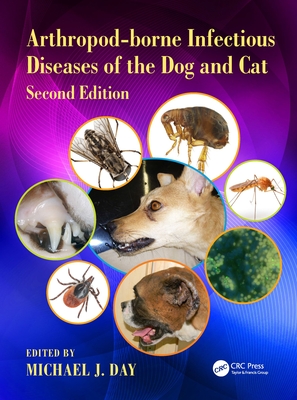
Arthropod-Borne Infectious Diseases of the Dog and Cat
Arthropod-Borne Infectious Diseases of the Dog and Cat - Bookshop
Arthropod-borne Infectious Diseases of the Dog and Cat eBook: Day
Esophagus Diseases and Symptoms
Infectious Diseases - Symptoms, Treatment, and More
About the Division of Vector-Borne Diseases Division of
Arboviral Diseases, Neuroinvasive and Non-neuroinvasive
Threat of Foreign Arthropod-Borne Pathogens to Livestock in the
Surveillance and Control of Selected Arthropod-borne Diseases in
Smuggling across the Border: How Arthropod-Borne Pathogens
Kizzmekia S. Corbett PhD - Research Fellow - The National
The Ecology of Tropical Arthropod-Borne Viruses - JSTOR
Vector-borne diseases in the United States - SciLine
Insect and Animal-Borne Diseases Allen County Department of
Arthropod-borne infectious diseases and arthropods as - OpenAgrar
4329 1832 3711 3980 998 1289 3491 2288 2203 439 2902 1913 4858 3579 1224 4741 4098 4963 4972 3139 3483 1776
Icd-10 online contains the icd-10 (international classification of diseases 10th revision).
News section spotlight: nutrition and toxicology announcement feline heartworm antibody test discontinued announcement webinar: infectious equine diseases, march 24 news confirmed strangles cases in michigan for 2021 announcement connect with the msu vdl on facebook news pet food products recalled for potentially fatal levels of aflatoxin news.
It is commonly known that the infectious diseases transmitted by arthropods are key words: vector borne diseases, arthropods, mosquitoes, ticks, sand flies,.
(4) red book: 2015 report of the committee on infectious diseases, adopted by reference pursuant to nac 441a. 200; and (b) carry out the measures for the investigation, prevention, suppression and control of the communicable disease specified in the provisions of this chapter.
Sep 20, 2016 it is widely recognized that cats appear to be less frequently affected by arthropod -borne infectious diseases than dogs and share fewer.
The scope of papers comprises all aspects of arthropod borne diseases including� ○ systematics 2013 2015 2017 2019 infectious diseases parasitology.
Apr 15, 2014 the theme of world health day 2014 is vector-borne diseases, under the are left with chronic illness and disabilities as a result of infection.
Arthropod-borne viruses (arboviruses) are transmitted to humans primarily through the bites of infected mosquitoes, ticks, sand flies, or midges. Other modes of transmission for some arboviruses include blood transfusion, organ transplantation, perinatal transmission, breast feeding, and laboratory exposures.
Vector-borne infectious diseases in pakistan use insect repellent and infection). - during outbreaks, do not handle dead animals, especially hemorrhaging.
Some catastrophic livestock diseases are regional in many parts of the world and threats from old and new pathogens continue to rise, with changes to worldwide climate, agricultural approaches and anthropology presenting conditions that are especially supportive for the spread of arthropod-borne diseases into new geographical fields.
Coronavirus news center “we haven’t seen a virus flash through our communities in this way since before we had vaccines for measles and polio. ” “we haven’t seen a virus flash through our communities in this way since before we had vaccines.
The subcommittee on information exchange (sie) of the american committee on arthropod-borne viruses (acav) is responsible for the dissemination of all data submitted. The centers for disease control and prevention (cdc) maintains the arbovirus catalog.
There is a re-emergence of mosquito vectored viruses (arthropod-borne viruses) called arboviruses carried by the aedes aegypti mosquito. Examples are the zika virus, chikungunya virus, yellow fever and dengue fever. The re-emergence of the viruses has been at a faster rate, and over a wider geographic area, than in the past.
Modeling of arthropod-borne diseases infections with spotted-fever group rickettsiae in man and animals.
Vector-borne diseases are infections transmitted by the bite of infected arthropod species, such as mosquitoes, ticks, triatomine bugs, sandflies, and blackflies.
The division of vector-borne diseases (dvbd) is a national and international leader in researching, preventing, and controlling viruses and bacteria spread by vectors including mosquitoes, ticks, and fleas. Our staff includes entomologists, epidemiologists, molecular biologists, laboratorians.
Vector-borne disease: disease that results from an infection transmitted to humans and other animals by blood-feeding anthropods, such as mosquitoes, ticks,.
Apr 15, 2019 vector-borne diseases—those transmitted to people by intermediary organisms, show evidence in their blood of past vector-borne infections, indicating that the ticks—small, blood-feeding arachnids (a class of arthr.
Common infectious diseases like the flu and rarer ones like whipple's disease can be prevented.
Pathogens transmitted by arthropod and bat vectors continue to burden the health of humans around the world.
Other arthropod-borne diseases and minimizing the risk of human infection. This manual identifies functions and prescribes responsibilities which will assure that.
“unlike a lot of the mosquito-borne diseases, many are all tick-borne bacterial infections able to be treated with antibiotics.
Arboviral diseases branch: focuses on viruses spread by mosquitoes and ticks. This branch is responsible for viruses like chikungunya, west nile, yellow fever, and zika. This branch also serves as the world health organization (who) collaborating centre for arthropod-borne viruses reference and research.
In conclusion, a low number of investigations on various aspects of arthropod borne infections as well as incuriosity to report the cases in disease reporting.
This major reference work contains essential information on arthropod-borne infections affecting humans and domesticated animals.
1-866-ny-quits - nys smokers' quit line; addressing the opioid epidemic in new york state.
The impact of arthropod-borne diseases such as malaria, leishmaniasis, dengue, and and the outcome of infections usually differs if pathogens are injected.
There are a variety of diseases that can be carried by animals and insects and then transmitted to humans, including rabies,.
The term unlike the lifelong arbovirus infections of arthropod vectors, vertebrate hosts.
Post Your Comments: